
Refine Your Mycology Skills with Targeted Mycology Question Bank FRCPath
- FRCPath Prep Medical Microbiology Consultants

- May 2
- 3 min read
Preparing for the FRCPath Medical Microbiology exams demands focused study and practical understanding. Mycology, a vital part of the syllabus, requires you to master fungal pathogens, diagnostics, and treatment strategies. Using a targeted mycology question bank FRCPath can sharpen your skills and boost your confidence. This approach helps you identify knowledge gaps and apply concepts effectively.
Why Use a Mycology Question Bank FRCPath?
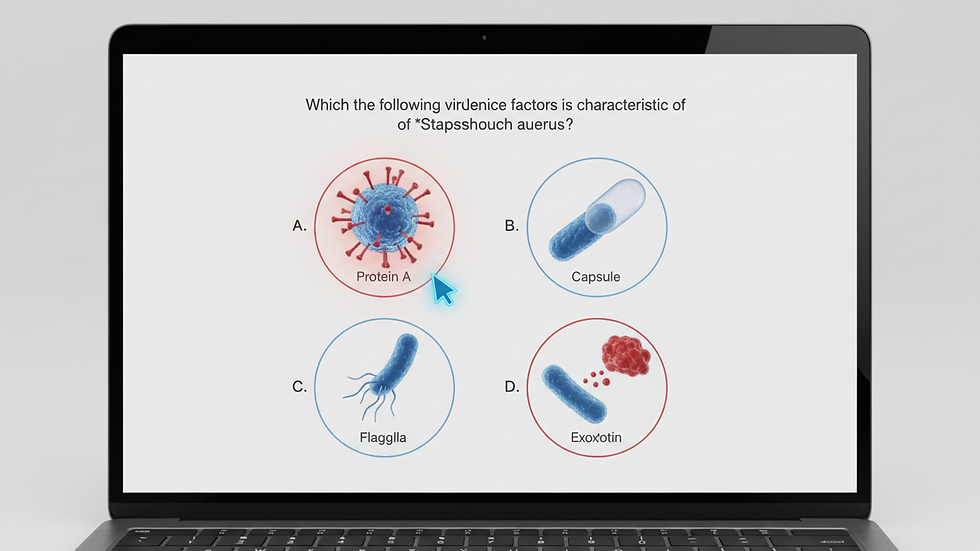
A mycology question bank tailored for FRCPath preparation offers several benefits. It provides a structured way to revise complex topics. You get exposure to exam-style questions that test your understanding and clinical reasoning. This method helps you practice time management and exam technique.
By working through questions regularly, you reinforce key facts about fungal biology, epidemiology, and antifungal therapies. You also learn to interpret lab results and clinical scenarios. This active learning approach is more effective than passive reading.
Here are some practical tips to get the most from your question bank:
Set a daily or weekly target for questions.
Review explanations carefully, even for correct answers.
Note down difficult topics for further study.
Simulate exam conditions to build stamina.
Discuss challenging questions with peers or mentors.

What is a FRCPath in Microbiology?
The Fellowship of the Royal College of Pathologists (FRCPath) is a prestigious qualification for medical microbiologists in the UK. It assesses your knowledge, skills, and clinical judgement in microbiology, including mycology. Passing the FRCPath exams is essential for career progression and consultant status.
The exam consists of two parts:
Part 1 - Focuses on basic sciences and laboratory techniques.
Part 2 - Tests clinical application and decision-making.
Mycology questions appear in both parts, reflecting its importance in diagnosing and managing fungal infections. Understanding fungal pathogens, lab identification methods, and antifungal treatment options is crucial.
Using a dedicated mycology question bank helps you prepare specifically for this section. It ensures you cover the syllabus comprehensively and practice answering questions in the exam format.
How to Maximise Your Study with a Question Bank
To get the best results from your study time, approach the question bank strategically. Here are some actionable recommendations:
Start Early: Begin using the question bank well before your exam date. This gives you time to identify weak areas.
Mix Topics: Don’t focus only on mycology. Include bacteriology, virology, and parasitology questions to maintain a balanced revision.
Use Explanations: Read detailed explanations for each question. This deepens your understanding and clarifies tricky concepts.
Track Progress: Keep a log of your scores and topics covered. This helps you monitor improvement and adjust your study plan.
Practice Under Timed Conditions: Simulate exam timing to improve speed and accuracy.
Remember, consistent practice with a question bank builds confidence. It reduces exam anxiety and prepares you for the style of questions you will face.
Key Mycology Topics to Focus On
When using a mycology question bank, pay special attention to these core areas:
Fungal Classification and Morphology: Know the major groups like yeasts, moulds, and dimorphic fungi.
Pathogenesis and Epidemiology: Understand how fungi cause disease and their risk factors.
Laboratory Diagnosis: Be familiar with culture methods, microscopy, antigen detection, and molecular tests.
Antifungal Agents: Learn the mechanisms, spectrum, and side effects of common antifungals.
Clinical Syndromes: Study common fungal infections such as candidiasis, aspergillosis, cryptococcosis, and dermatophytosis.
Infection Control: Know how to prevent fungal outbreaks in healthcare settings.
Focusing on these topics ensures you cover the essentials tested in the FRCPath exams.
Why Choose a Targeted FRCPath Mycology Question Bank?
A targeted question bank designed specifically for FRCPath preparation offers tailored content aligned with the exam syllabus. It avoids irrelevant material and focuses on high-yield topics. This saves you time and effort.
Additionally, such question banks often include:
Updated questions reflecting current guidelines.
Explanations written by experienced microbiologists and examiners.
Questions that mimic the exam format and difficulty.
Access to online platforms for flexible study.
Using a frcpath mycology question bank ensures you prepare efficiently and effectively. It supports your goal to pass the exam and advance your career.
Keep Your Motivation High
Studying for the FRCPath exams can be challenging. Using a question bank helps keep your revision active and engaging. Celebrate small wins when you improve your scores or master a difficult topic.
Remember, every question you answer brings you closer to your goal. Stay positive and consistent. Your hard work will pay off.
By integrating a targeted mycology question bank into your study routine, you refine your knowledge and exam skills. This focused preparation is key to success in the FRCPath Medical Microbiology exams. Keep practising, stay confident, and look forward to achieving your consultant qualification.


Comments